Too many possible candidates, too little experimental capacity.
CNS discovery produces more molecules and linker options than can be tested efficiently in the lab.
Connecting small molecule prioritization, brain targeting linker chemistry, and human relevant blood-brain barrier validation in an iterative development workflow.
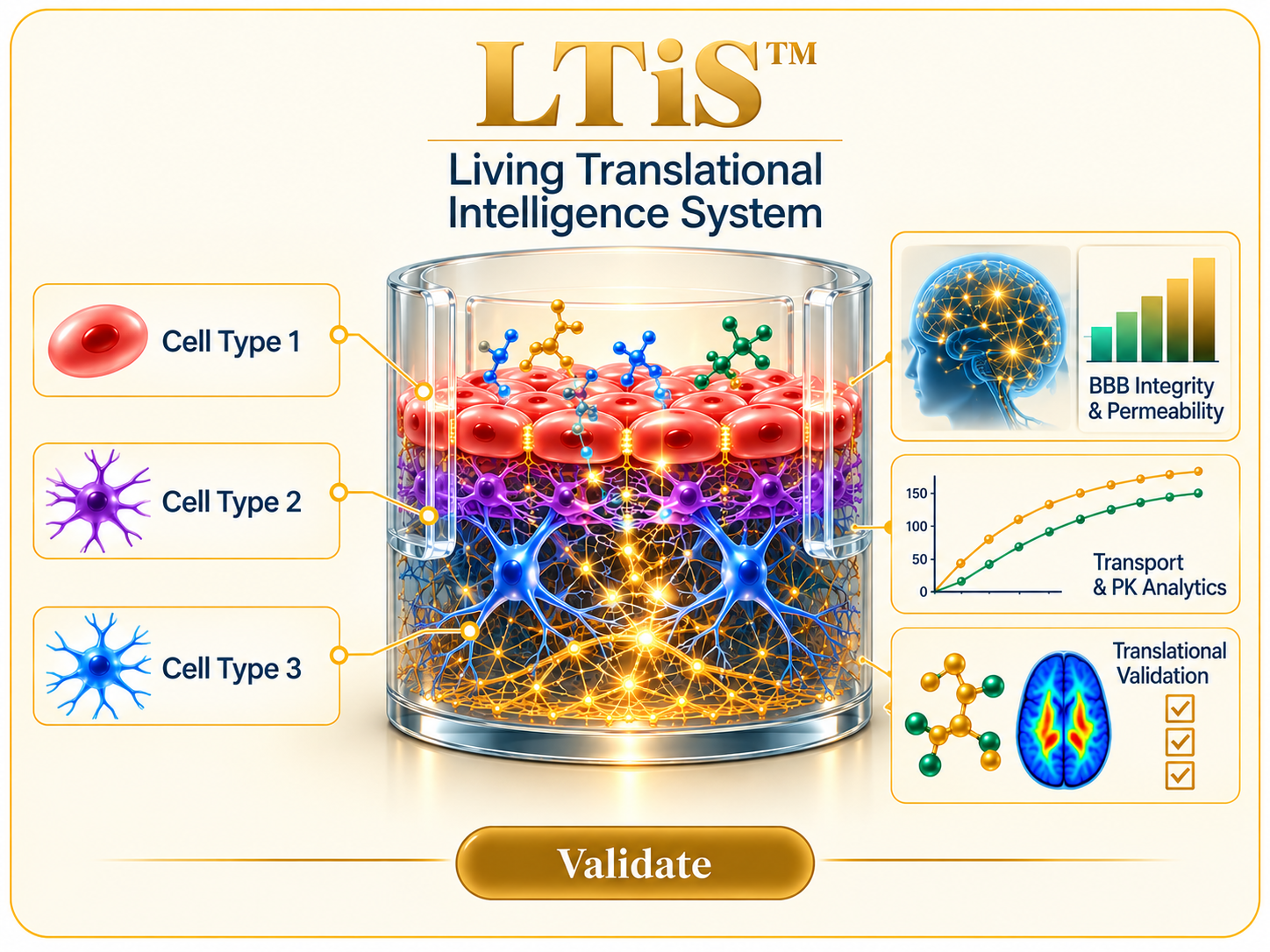
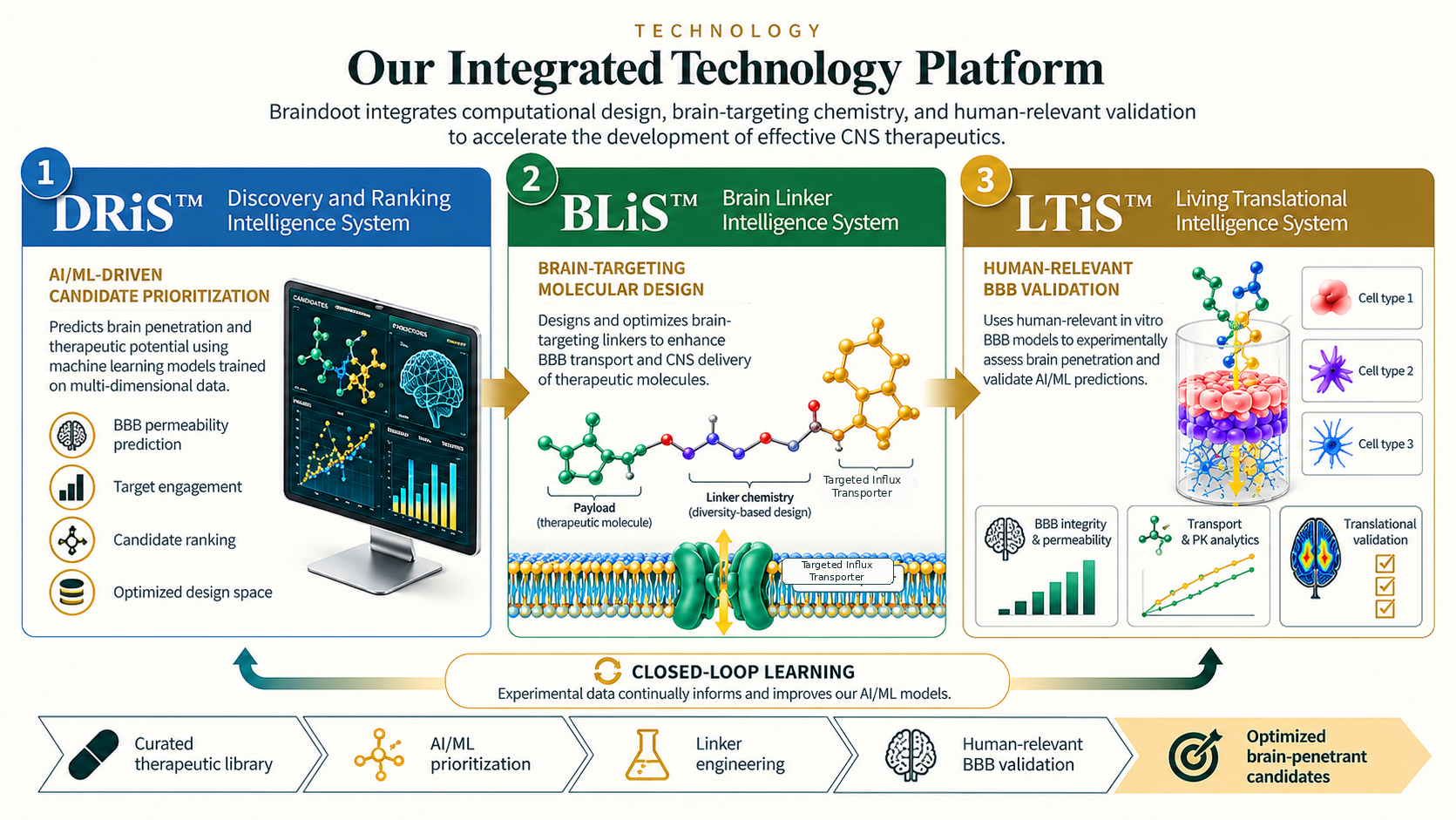 Conceptual illustration of the proposed integrated platform. Graphics are illustrative and not experimental data.
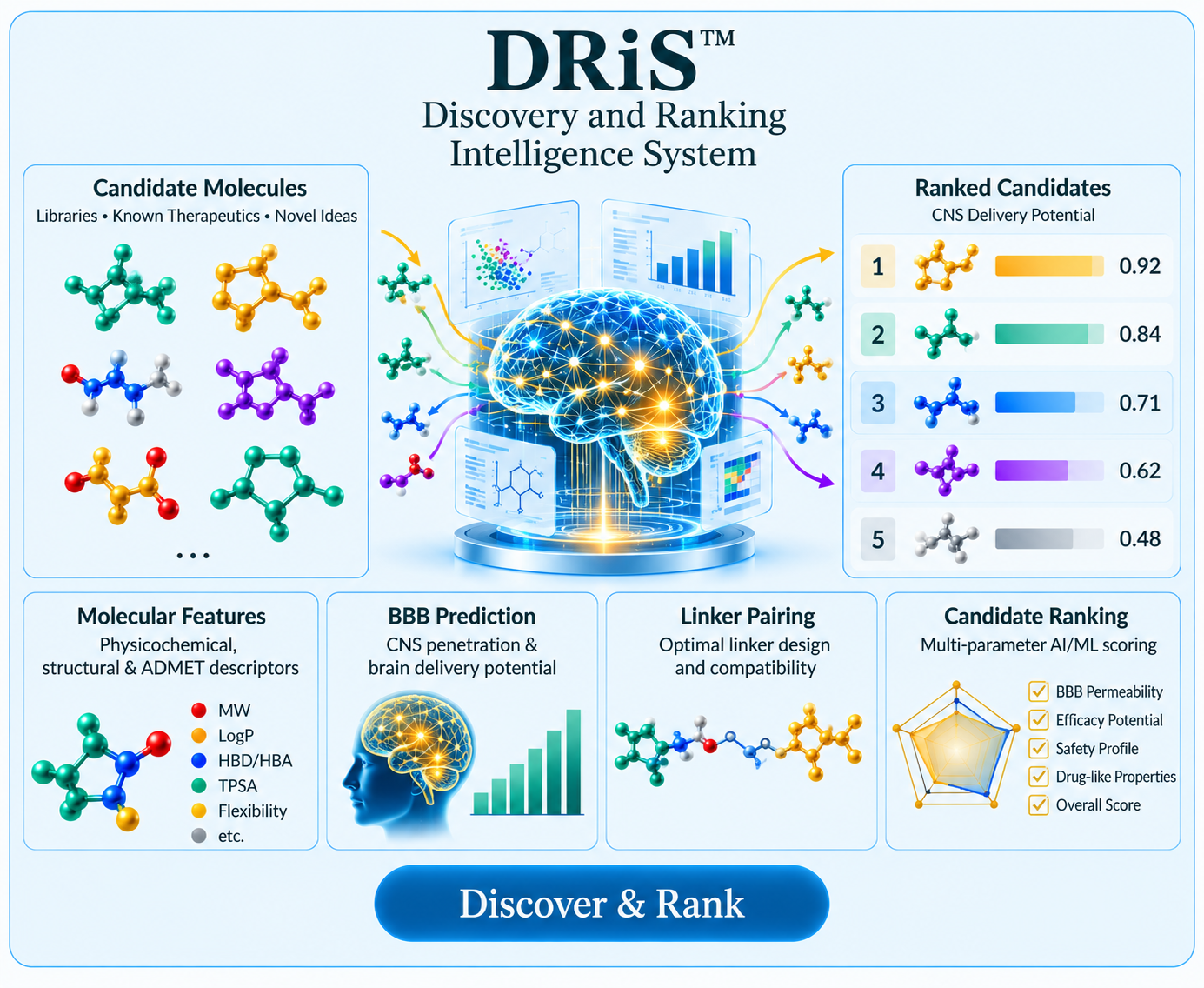
DRiS™ ranks small molecule candidates for brain penetration potential and guides linker selection. It is the next version of an ML program that has already been designed and tested in an initial test case. The first validation dataset is under review for scientific publication.
The platform prioritizes small molecule and linker combinations based on molecular properties, transporter interactions, pharmacology, blood-brain barrier characteristics, and developability data. The objective is to focus laboratory resources on the most promising experiments.
DRiS™ integrates in silico, in vitro and in vivo data. Experimental results feed back into the model to inform each round of prioritization.
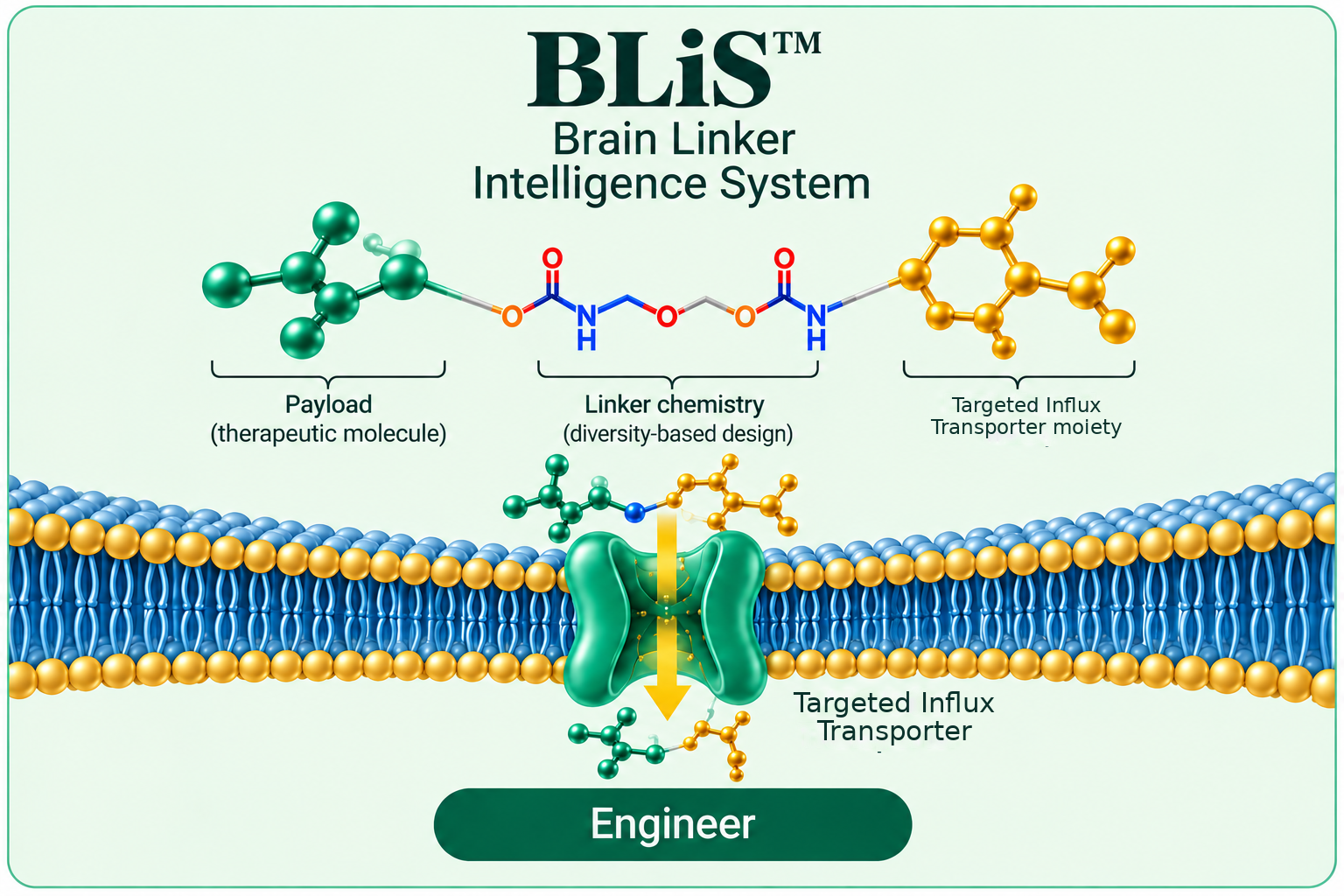
BLiS™ is a proposed linker chemistry platform that pairs selected small molecule therapeutics with a rationally designed library of tunable, Targeted Influx Transporter oriented linkers. Its goal is to enhance BBB transport while retaining the parent drug’s activity.
Candidates will be tested for permeability, stability, and release behavior. Greater CNS and tumor exposure is a design objective, with the potential to improve the therapeutic utility of existing drugs.
LTiS™ is being developed as an in vitro patient derived BBB platform for evaluating small molecule candidates. It is designed to model the cellular complexity of the human blood-brain barrier and to include patient derived brain tumor cells.
Planned transporter-focused configurations include MDR1 knockout and Targeted Influx Transporter perturbation models. These are intended to help distinguish how candidates are transported across the barrier, including efflux and influx.
LTiS™ is designed to evaluate candidates in a patient derived BBB platform earlier, before the more expensive animal and clinical stages. Its results feed back into DRiS™ to improve prediction and into BLiS™ to guide linker design.
Selected excerpts from letters supporting Braindoot’s proposed NIH SBIR work. They describe the scientific rationale for integrating computational discovery and human model BBB validation, not proof of platform performance.
“Braindoot is addressing an important and commercially relevant problem for which improved solutions are urgently needed.”
“This closed-loop strategy is more compelling than either an independent algorithm or a single simplified permeability assay.”
“From my perspective, this represents a scientifically compelling application of machine learning.”
“Such an approach could provide considerably more information than either strategy used independently.”
Affiliations identify letter authors and do not imply institutional endorsement.
Interested in the scientific approach or a development collaboration?
Explore partnerships